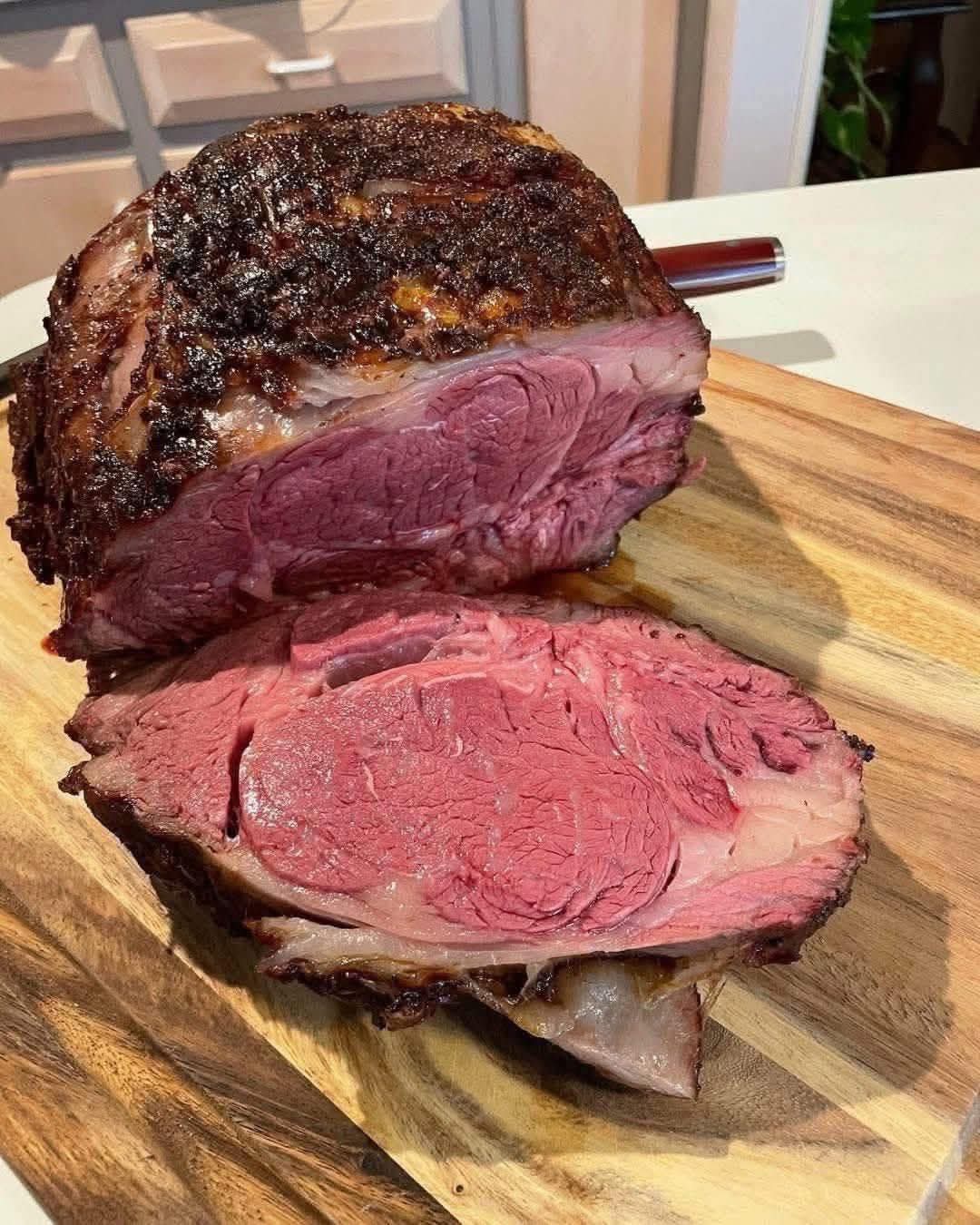
Our step-by-step prime rib recipe guarantees a juicy, perfectly cooked roast with a flavorful herb crust. The only guide you need for a stunning holiday main course.
There are few moments in a home cook’s life as simultaneously thrilling and intimidating as presenting a prime rib roast. It is the undisputed king of holiday tables, a symbol of celebration, abundance, and culinary prowess. The goal is clear: a majestic, bone-in rib roast, with a dark, crackling, savory herb crust giving way to a broad, uniform band of juicy, pink, perfectly cooked meat from edge to edge. No dry, overcooked outer layers. No undercooked, cold center. Just pure, succulent, beefy perfection.
Yet, for all its glory, prime rib is shrouded in anxiety. The cost, the timing, the fear of ruining such a magnificent piece of meat. This guide exists to banish that fear forever. This isn’t just a recipe; it’s a foolproof, science-backed method—often called the reverse sear—that delivers professional results with home kitchen confidence. We’re talking about a guaranteed juicy prime rib with the most even doneness imaginable, minimal active work, and a stress-free timeline that lets you enjoy the party.
Whether this is your first holiday hosting or you’re a seasoned cook aiming for your best roast ever, this is the only guide you’ll need. We’ll cover selecting the right roast, the crucial dry-brine, the low-and-slow oven magic, and the powerful final sear. Let’s conquer the crown jewel of roast beef together.
Why the Reverse Sear Method is a Game-Changer for Prime Rib
Forget the old method of blasting the roast at high heat and hoping for the best. The reverse sear is a deliberate, gentle technique that guarantees perfection.
· Unbeatable Even Doneness: By starting the roast in a very low oven (200-250°F), the entire piece of meat slowly comes up to the exact target temperature you desire. The result? A consistent, beautiful pink from almost edge to edge, with only the thinnest layer of crust. No more “bullseye” of doneness.
· Maximized Juiciness & Tenderness: Cooking at a low temperature minimizes the violent contraction of muscle fibers that squeezes out moisture. The connective tissue gently renders, and the roast retains its natural juices spectacularly well.
· The Perfect, Unburnt Crust: Because the roast is already cooked before searing, you can apply extreme heat (500°F) for a short time solely to develop a magnificent, crispy, flavorful crust without risking an overcooked interior.
· Stress-Free Timing & Flexibility: The slow oven phase has a wide window of doneness. Your roast can hold at its perfect temperature for over an hour before you need to sear it, making it impossible to mess up the timing for your guests.
· A Drier Surface for Better Browning: The long, slow cook dries the exterior of the roast thoroughly, which is the secret to achieving a deep, restaurant-quality sear in the final step.
Selecting & Preparing Your Prime Rib: The Foundation
The journey to a perfect roast begins at the butcher counter.
Choosing Your Roast:
· Bone-In is Best: Always choose a bone-in standing rib roast. The bones add immense flavor, insulate the meat for even cooking, and create a natural rack. Ask your butcher to “chine” the roast (separate the backbone from the ribs) for easier carving, but to leave the ribs attached.
· Grade & Size: USDA Prime is the gold standard for marbling and flavor, but Choice grade can be excellent. For a holiday dinner, plan on one rib bone for every two people. A 3-bone roast (approx. 6-7 lbs) serves 6-8; a 4-bone (8-9 lbs) serves 8-10.
· The “Prime Rib” Name: Technically, the cut is a rib roast. “Prime rib” implies it’s of Prime grade, but the term is often used colloquially for any rib roast.
For the Dry Brine & Crust (The Flavor Engine):
· 1 whole standing rib roast (3-4 bones, 6-10 lbs)
· Kosher salt (approx. 1 tablespoon per 5 lbs of meat)
· Freshly ground black pepper
· 3-4 tablespoons fresh rosemary and thyme, chopped
· 6-8 cloves garlic, minced
· 3-4 tablespoons olive oil or softened unsalted butter
Essential Tools:
· A reliable instant-read thermometer or probe thermometer (NON-NEGOTIABLE)
· A large roasting pan with a rack
· Butcher’s twine (if your butcher hasn’t already tied it)
Step-by-Step Instructions: The Path to Perfect Prime Rib
This process spans 1-3 days but requires very little active effort. Patience is rewarded.
Step 1: The Dry Brine (1-3 Days Before Cooking)
This is the single most important step for seasoned,juicy meat. Pat the roast completely dry with paper towels. Using your hands, rub a generous amount of kosher salt all over the entire surface of the roast, including the bones and ends. Place the roast on a wire rack set over a baking sheet, uncovered, in the refrigerator for at least 24 hours, and ideally for 2-3 days. This allows the salt to penetrate deeply, seasoning the meat throughout and helping it retain moisture.
Step 2: The Herb Paste & Bringing to Temp
About 2 hours before cooking,remove the roast from the fridge. In a small bowl, combine the chopped herbs, minced garlic, black pepper, and olive oil (or softened butter) to form a paste.
Rub this herb paste generously over the entire surface of the roast.Let the roast sit at room temperature for 1.5 to 2 hours to take the chill off. This promotes even cooking.
Step 3: The Low & Slow Roast (The Reverse Sear)
Preheat your oven to a very low225°F (107°C). Place the roast, bone-side down, on a rack in your roasting pan.
Insert a probe thermometer into the very center of the roast,avoiding fat or bone.
Roast until the internal temperature reaches your desired doneness.This will take 3.5 to 5+ hours depending on size. DO NOT OPEN THE OVEN. Trust the thermometer.
* Target Temperatures:
* Rare:115-120°F (46-49°C) before searing
* Medium-Rare:120-125°F (49-52°C) before searing
* Medium:130-135°F (54-57°C) before searing
(Temperature will rise 5-10°F during the rest and sear.)
Step 4: The Rest & The Blazing Hot Sear
Once the roast hits your target temperature,remove it from the oven. Tent loosely with foil and let it rest for at least 30-45 minutes, up to 2 hours. This allows the juices to redistribute.
CRITICAL:During the rest, increase your oven temperature to its highest setting, 500°F (260°C) or broil.
After the rest,return the roast to the hot oven for 8-12 minutes until the exterior is deeply browned, crackly, and glorious. Watch it closely to avoid burning the herb crust.
Step 5: The Final Rest & Carve
Remove the roast from the oven,transfer to a carving board, and let it rest for 10-15 minutes. This final rest after the sear lets the crust settle.
To carve,slice the bones off completely by running a sharp knife along the backbone. Then, turn the roast onto its flat, boneless side and slice into desired thickness. Serve the ribs on the side for gnawing.
Pro Secrets: Tips for Absolute Perfection
· The Thermometer is Your Best Friend: Guessing is not an option. A leave-in probe thermometer lets you monitor progress without opening the oven.
· Make Au Jus from the Pan: While the roast rests, place the roasting pan on the stovetop. Add 1-2 cups of beef broth or red wine, scrape up the browned bits (fond), and simmer for 5 minutes. Strain for an incredible, simple sauce.
· The “Hold” is Your Safety Net: The rested, slow-cooked roast can comfortably sit (tented) for 60-90 minutes before the final sear. This is your buffer against early or late guests.
· For a More Traditional Method: If you must use a high-heat method, roast at 450°F for 20 minutes, then reduce to 325°F until the target temperature is reached. The results will be less even but still delicious.
· Leftover Magic: Leftover prime rib makes the best sandwiches. Slice thin, pile on toasted bread with horseradish sauce.
Serving Suggestions: The Grand Presentation
· Classic Pairings: Serve with creamy horseradish sauce, au jus, Yorkshire puddings, creamed spinach, hasselback potatoes, or a rich potato gratin.
· Wine Pairing: A bold Cabernet Sauvignon, Syrah, or Malbec is the classic choice.
FAQs: Your Prime Rib Questions, Answered
Q: Should I bring the roast to room temperature before cooking?
A: Yes, but be safe.1.5-2 hours on the counter is sufficient to take the chill off the exterior, promoting even cooking, without letting the meat enter the “danger zone” for too long.
Q: Why is my prime rib gray and overcooked on the outside?
A:This is the classic flaw of high-heat-only roasting. The reverse sear method outlined above is specifically designed to eliminate this problem.
Q: How do I calculate cooking time?
A: Throw away the “minutes per pound” charts.They are unreliable. Your cooking time is done when the internal temperature reaches your target. For the low-temp reverse sear, budget approximately 30-40 minutes per pound, but always rely on the thermometer.
Q: Can I prepare this ahead of time?
A:You can complete Steps 1 & 2 (dry brine and herb rub) up to 3 days ahead. Keep it covered in the fridge until 2 hours before cooking.
The Final, Majestic Carve
A perfectly executed prime rib is more than a meal; it’s a centerpiece that creates a moment. It’s a testament to your care and skill, a generous offering that fuels conversation and celebration. The reverse sear method demystifies this legendary cut, turning what was once a high-stakes gamble into a predictable, glorious success.
As you slice into that rosy interior and hear the satisfying crunch of the crust, you’ll feel the quiet confidence of a master. This guide has given you the keys. Now, go forth, select your roast, and prepare to receive the ultimate compliment: the silent, happy focus of your guests, followed by the inevitable request for your secret.
Did you make this recipe? Share your majestic roast! Tag your photos on social media with #FoolproofPrimeRib. We love seeing your holiday masterpieces! Don’t forget to save this guide to your “Holiday Cooking” board.
Prep Time: 30 mins (plus 1-3 days dry brine) | Cook Time: 4-5.5 hrs (low temp) + 10 mins (sear) | Resting Time: 45 mins – 2 hrs | Total Time: Varies | Category: Main Course | Cuisine: American | Yield: 2 servings per rib bone
Nutritional Information (Per 8oz serving of meat, estimated): Calories: 580, Fat: 46g, Saturated Fat: 19g, Protein: 38g, Carbohydrates: 0g.
More Recipes You Might Like
-
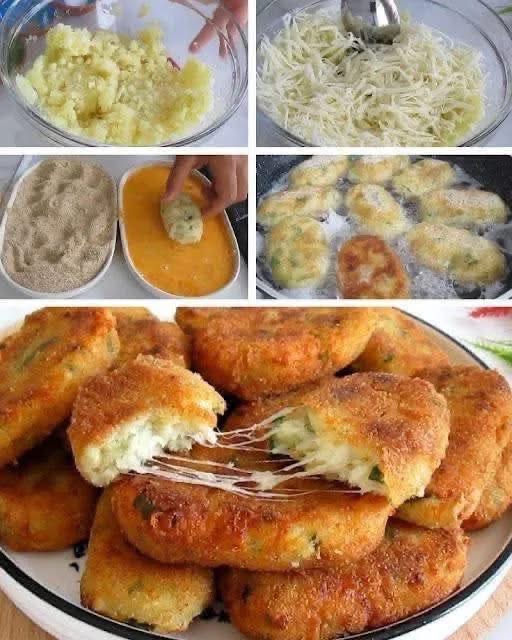
Cheesy Potato Patties 😋 – Crispy, Golden, and Irresistibly Cheesy If you’re looking for a high-RPM comfort food recipe that gets clicks, saves, and repeat cooks, Cheesy Potato Patties are a guaranteed winner. Crispy on the outside, soft and fluffy on the inside, and loaded with melty cheese—this recipe checks every box readers love: easy…
-
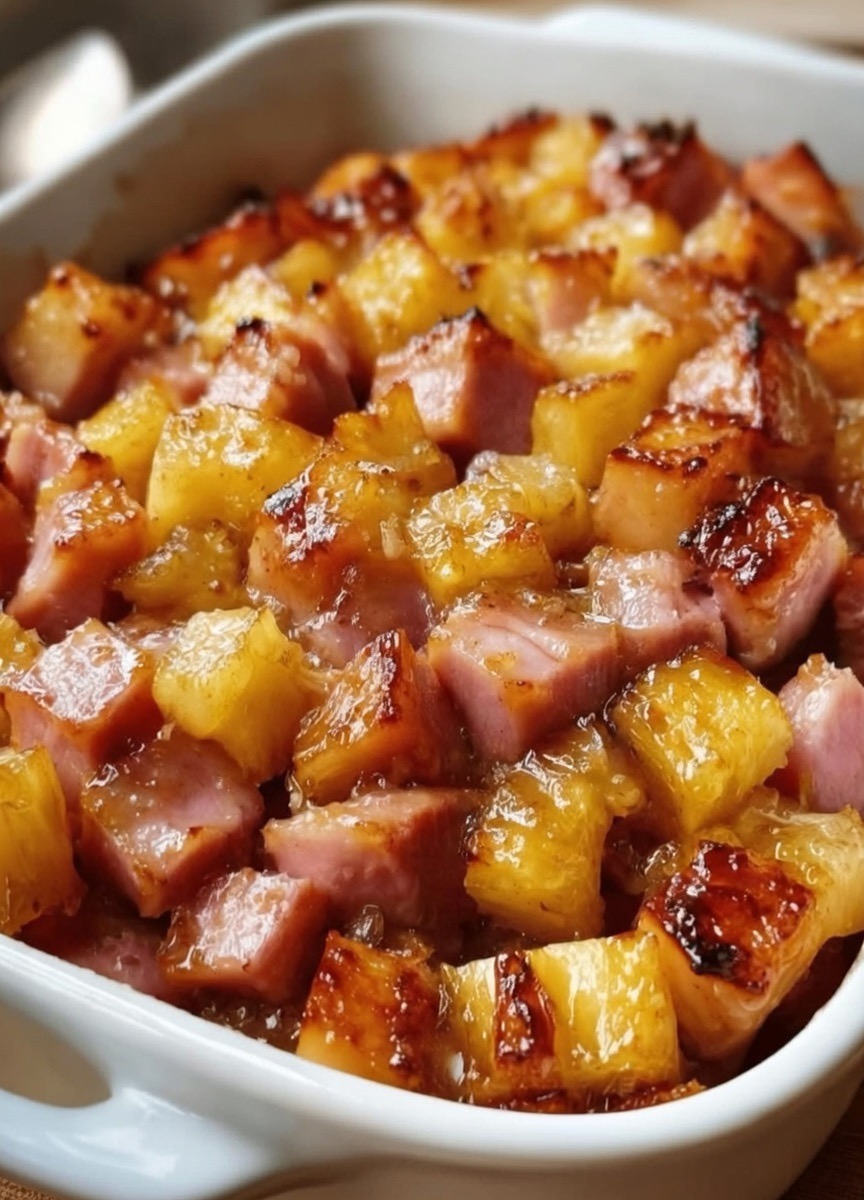
Brown Sugar Pineapple Ham Bake 😋 – The Ultimate Sweet & Savory Comfort Dish If you’re searching for a high-RPM, comfort-food recipe that people love clicking, saving, and cooking again and again, this Brown Sugar Pineapple Ham Bake is it. Sweet, sticky brown sugar. Juicy pineapple. Tender, savory ham. Baked together into one irresistible dish…
-
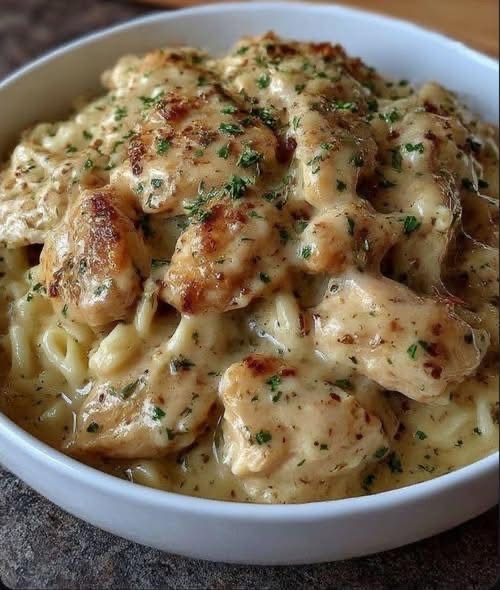
Angel Chicken Pasta – The Creamy Comfort Food That Everyone Loves
Few dishes feel as comforting, indulgent, and crowd-pleasing as Angel Chicken Pasta. This creamy, slow-cooked chicken pasta recipe has earned its name because it’s truly heavenly—rich, velvety sauce, tender chicken, and perfectly cooked pasta all coming together in one unforgettable meal. Angel Chicken Pasta is one of those recipes that never goes out of style.…